
Every restaurant has its own story, concept, and way of operating. Even restaurants serving similar food can have very different needs when it comes to kitchen layout, equipment, and service.
Consider something as familiar as pizza. There are dozens of different styles of pizza ovens, each capable of producing a unique product. Some restaurants hand-stretch their dough, while others use an automated roller or press.
These decisions influence the equipment, space, and workflow required to support the operation.
This is why collaboration is such an important part of restaurant design and development.
Creating a functional food service operation requires more than selecting equipment and arranging workstations. It requires understanding the restaurant's concept, the owner's vision, and the needs of the people involved in bringing that vision to life.
At National Restaurant Design (NRD), we believe every food service design should be developed around the unique needs of the business, with input from the people responsible for its success.
Why Collaboration Matters in Restaurant Design and Development
Restaurant design and development often involves several professionals, each bringing a different perspective and area of expertise.
Depending on the project, participants may include the restaurant owner, chef, manager, architect, interior designer, general contractor, mechanical engineers, and other specialists.
Each plays an important role in the overall project.
The owner establishes the vision for the business.
The chef understands how food will be prepared and served.
The architect considers how the kitchen and service areas fit into the larger building design.
Contractors and engineers address the technical requirements involved in making the design functional.
The food service designer must understand these perspectives and develop a design that supports the restaurant's concept while addressing its operational needs.
At NRD, this collaborative approach helps ensure that the design reflects the client's vision and works for the people who will ultimately use the space.
Seven Key Elements of Restaurant Planning and Design
Although every restaurant is unique, there are several common considerations that guide the food service design and development process.
Frank Stocco, founder of National Restaurant Design, identifies seven elements that are essential to developing a successful design.
1. The Participants
Restaurant planning and design begins with identifying the people involved and understanding their roles.
Owners, chefs, managers, architects, and other project participants may approach the design from different perspectives. While everyone is working toward a successful restaurant, their individual priorities may vary.
Understanding these perspectives early in the process helps establish a shared direction.
Collaboration also provides opportunities to identify potential challenges, discuss solutions, and make informed decisions before the design is finalized.
2. The Space
Every restaurant design project must account for the available space.
Whether the project involves a new restaurant or the renovation of an existing operation, the size and configuration of the space influence equipment placement, workstation organization, storage, and movement throughout the kitchen.
However, more space doesn't necessarily mean a more efficient operation.
Frank emphasizes designing kitchens that use space effectively while minimizing unnecessary movement and labor demands.
The objective is to determine how much space the restaurant actually needs and organize it around the way the business will operate.
3. The Story
Every restaurant has a story behind it.
That story may involve the owner's background, culinary influences, business goals, or the experience the restaurant hopes to create for its guests.
Understanding the story helps provide context for design decisions.
For example, a chef-driven restaurant built around a particular cooking technique may require a different kitchen configuration than a casual restaurant focused on quick service.
The design should support what makes the restaurant unique rather than follow a standard layout simply because it has worked for another business.
4. The Vision
The owner's vision establishes what the restaurant is intended to become.
That vision may include the dining experience, service style, menu, operational priorities, and long-term goals for the business.
An important part of restaurant design and development is translating that vision into a functional space.
This requires communication between the owner, food service designer, and other project participants to understand expectations and determine how the design can support them.
5. The Concept
The restaurant concept connects the owner's vision to the practical details of daily operations.
Menu offerings, food preparation methods, service style, and production requirements all influence the equipment and layout.
Consider the pizza example.
A restaurant using a wood-fired oven and hand-stretched dough will have different equipment and preparation needs than one using an automated dough press and another type of oven.
Both may serve pizza, but their kitchens won't necessarily look or function the same way.
Understanding these differences is essential before selecting equipment or developing the kitchen layout.
6. The Flow and Service
Efficient workflow is one of the most important considerations in food service design.
How ingredients, employees, food, and supplies move through a restaurant affects the operation throughout the day.
The design must account for how ingredients move from storage to preparation, how food moves through cooking and service, and how employees navigate between workstations.
The relationship between the kitchen, dining area, and other service spaces also matters.
Frank's background as a chef and restaurant owner has shaped his emphasis on efficient workflow. He understands how kitchen organization can affect employees' ability to work efficiently and deliver a positive guest experience.
A successful design should support both the people working in the restaurant and the customers they serve.
7. Equipment
Equipment selection is another important part of restaurant planning and design.
The type, size, and placement of equipment should reflect the menu, preparation methods, production requirements, and available space.
Equipment decisions also affect plumbing, electrical, ventilation, and other building requirements.
For that reason, equipment planning must be coordinated with the broader design team.
At NRD, equipment selection and specifications are developed as part of the overall food service design process rather than treated as separate decisions.
How the Collaborative Design Process Works at NRD
Collaboration doesn't end after the initial meeting. It continues throughout the design process.
At National Restaurant Design, the process begins with a conversation about the client's concept, vision, project needs, and the scope of NRD's involvement.
Once the project moves forward, Frank conducts a more detailed interview to gather the information needed to create a preliminary concept drawing.
This drawing provides a starting point for discussion.
The client reviews the proposed design, provides feedback, and identifies changes that may be needed. NRD then incorporates that feedback into the design before preparing the final drawings and equipment schedule.
The next phase involves equipment specifications and technical coordination, including documentation related to plumbing, electrical requirements, ventilation, and other equipment installation considerations.
This approach allows the design to develop through communication, review, and refinement.
Rather than assuming that one layout or equipment configuration will work for every restaurant, the process focuses on understanding the specific needs of each operation.
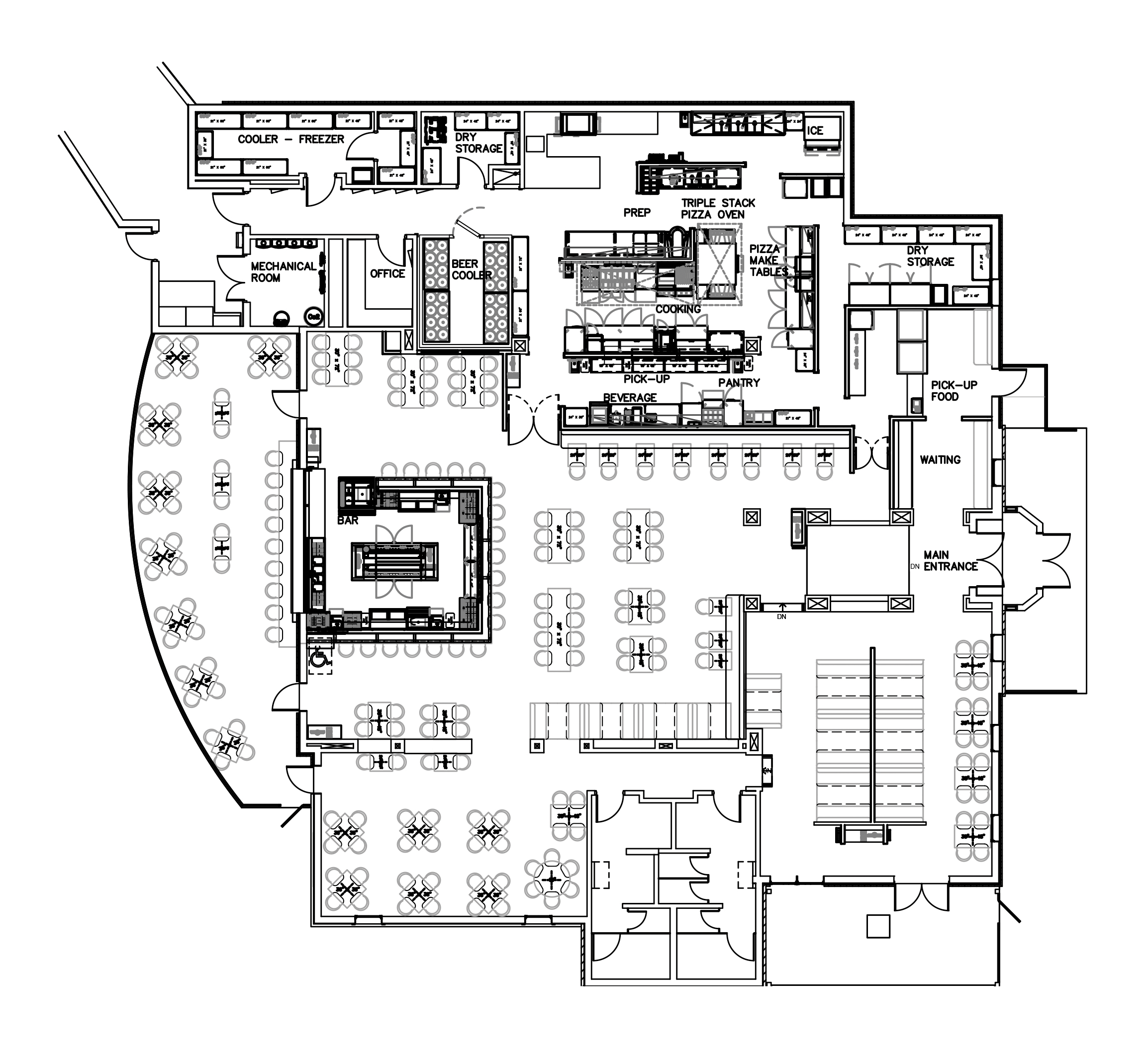
High Volume Pizza Restaurant Design
Bringing Experience to Restaurant Design and Development
Successful restaurant design requires an understanding of both the technical requirements of a space and the realities of running a food service operation.
Frank Stocco brings decades of food service design experience, along with a background as a chef and restaurant owner, to that process. He is also the author of A Collaborative Process for Food Service Design, reflecting his longstanding emphasis on collaboration in restaurant design.
His experience allows him to approach projects from an operational perspective while working closely with owners, chefs, architects, and other professionals involved in restaurant development.
At National Restaurant Design, we believe collaboration is essential to creating a design that reflects the client's concept, supports efficient operations, and meets the needs of everyone involved.
Planning a restaurant project?
Planning a new restaurant or renovating an existing food service operation? Contact National Restaurant Design to discuss your project and design needs.
